the problem
Viruses, especially RNA viruses like influenza and coronaviruses, are prone to mutations that arise in the replication process. These mutations can alter viral surface proteins, which are key targets for vaccines. As a result, vaccines can become less effective over time, creating an ongoing race between virus evolution and vaccine development.
History of Influenza Pandemics
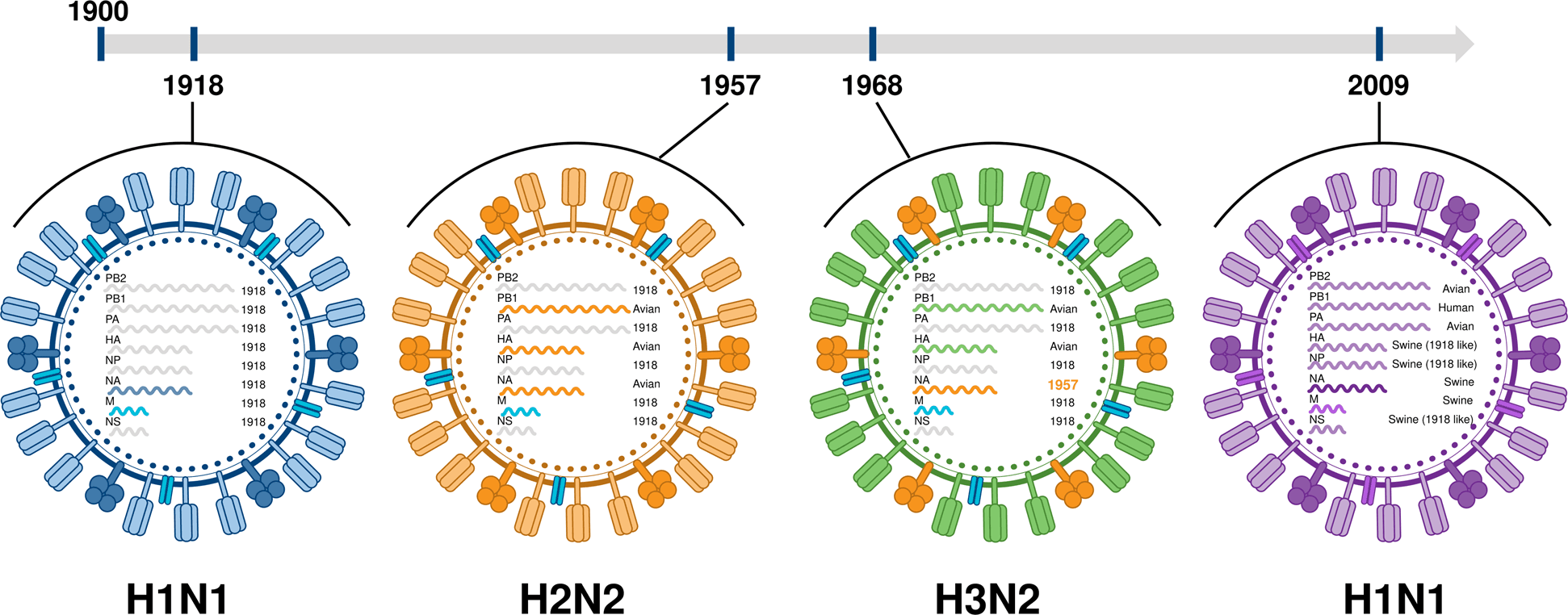
There have been four influenza pandemics since the turn of the 20th century, occurring in 1918 (H1N1), 1957 (H2N2), 1968 (H3N2), and 2009 (H1N1). This timeline shows the temporal and genetic reassortment relationships among each of the pandemic influenza. Source: The evolution and future of influenza pandemic preparedness.
Based on our research, Carragenix™ shows strong efficacy against the following categories of both enveloped and non-enveloped viruses
Women’s Health, STIs
Human Respiratory
Animal Respiratory
What is Lanvira?
Lanvira is a healthcare company developing preventative antiviral treatments for humans and animals leveraging Carragenix™ — a natural, proprietary compound from the red seaweed carrageenan. Clinical research to unlock physical barrier-forming properties against a broad spectrum of viruses has been conducted and backed by such institutions as the National Cancer Institute, Rutgers University, and McGill University.
What is Carragenix™?
Carragenix™ is Lanvira's antiviral gel formulated with a proprietary mix of carrageenan as its active ingredient. Sulfate groups on carrageenan molecules physically block viral attachment to healthy cells, creating a protective barrier before infection occurs. Carragenix™ can be formulated for different therapeutic applications ranging from human respiratory and STIs to animal diseases.
What is a preventative antiviral?
A preventative antiviral stops viral infection before it takes hold by blocking the virus at the point of cell entry. Unlike treatment antivirals — which are taken after infection begins — preventative antivirals create a barrier that stops the virus from attaching to and entering cells in the first place. Carragenix™ works through this preventative physical mechanism.
How is Carragenix™ different from antiviral drugs?
Most antiviral drugs work chemically by targeting a specific viral protein, making them effective against only one virus type and vulnerable to resistance as the virus mutates. Carragenix™ uses a physical mechanism — blocking viral attachment to cells — which is not virus-specific. This makes it effective across multiple virus types and resistant to becoming obsolete through viral mutation. Importantly, Carragenix™ acts on viruses, NOT on the host cells.
Which viral conditions does Carragenix™ target?
Carragenix™ shows strong efficacy across three therapeutic areas: women's health and sexually transmitted infections (STIs), human respiratory viruses including influenza, and animal respiratory viruses. In-vitro testing demonstrates effectiveness across multiple influenza mutations, suggesting potential broad-spectrum applicability. See our pipeline page for the current stage of development in each category.
Is Carragenix™ FDA approved?
Carragenix™ is currently in clinical development and has not yet received FDA approval as a medical treatment. However, its active ingredient — mixture of carrageenan — is classified as Generally Recognized as Safe (GRAS) by the FDA and is approved by the European Food Safety Authority (EFSA) for use in food products. See our science page for full safety information.