Carrageenan is a naturally occurring sulfated polysaccharide found in red seaweeds. It’s commonly used in the food and pharmaceutical industries as a gelling agent, thickener, stabilizer, and emulsifier. Carrageenans form soft gels in the presence of calcium and display antiviral properties.

There are three forms of carrageenans: kappa, iota, and lambda, each with distinct properties and uses. The difference is in the number of sulfates (kappa has 1, iota - 2, and lambda - 3). The sulfate groups enable virus trapping by blocking viral attachment.
Carragenix™ gel technology uses a proprietary mix of carrageenan as its core ingredient.
kappa carrageenan
iota carrageenan
lambda carrageenan
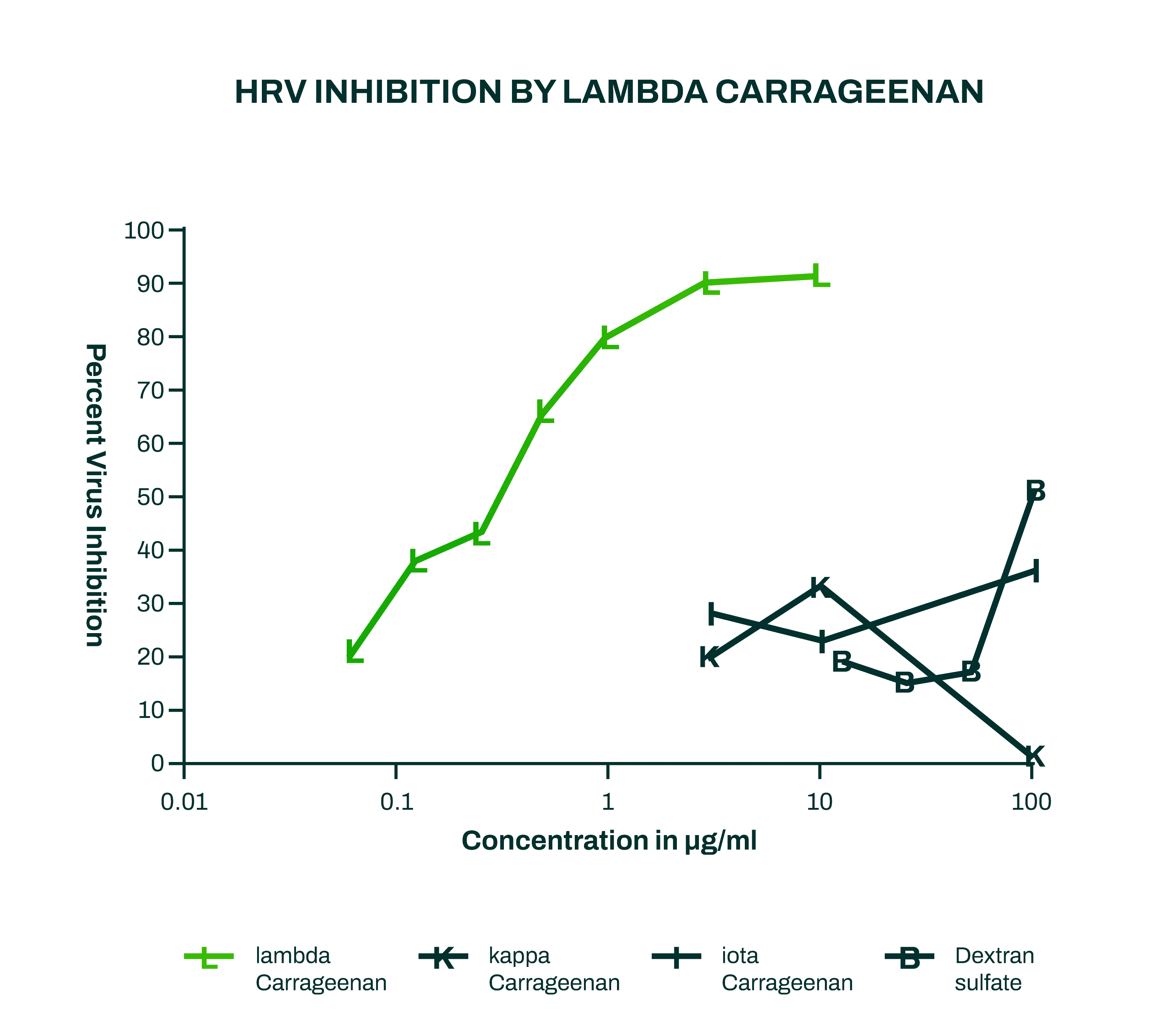
The sulfate groups are what create the virus trapping mechanism - making lambda the most efficient variant of all with 3 groups present. The strength of lambda variant, for example, was documented by Abbott Laboratories in their 1997 patent #5,658,893 titled “Method for inhibition of rotavirus infection with carrageenan.”
To achieve the same level of virus inhibition with a Kappa carrageenan-based solution, one would need 100 times more product versus that of Lambda-based formula.
Our solution
Carragenix™ is a natural, antiviral gel formulated with a proprietary mix of carrageenan as its main active ingredient. Active sulfate groups effectively inhibit viral attachment to healthy cells, providing a protective barrier against infection. Carragenix™ can be formulated to meet the specific needs of different markets based on where the gel should be applied.
Safety
Carrageenan is generally recognized as safe (GRAS) and is used in many food products regulated by the U.S. Food and Drug Administration (FDA) and the European Food Safety Authority (EFSA). It is extracted from red seaweed and is primarily used as a thickening, stabilizing, and gelling agent in various dairy and plant-based products, including liquid baby formula.
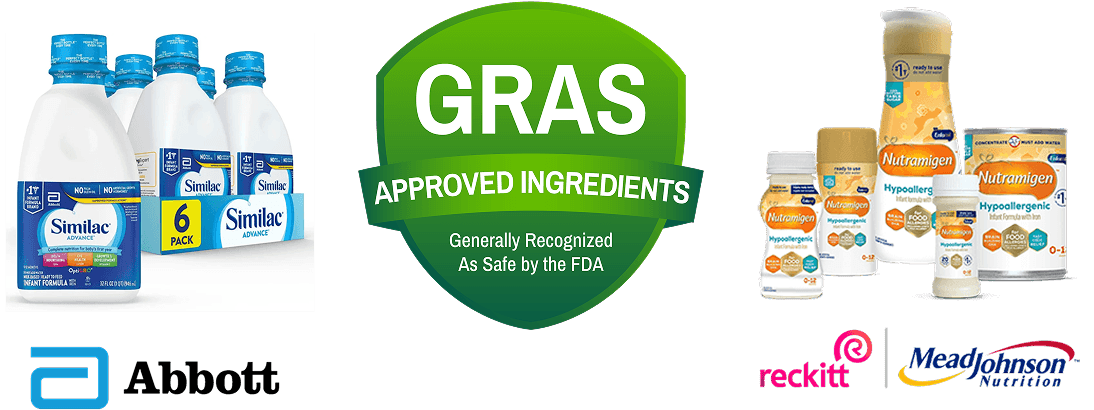
While some concerns have been raised regarding carrageenan’s potential to cause gastrointestinal inflammation, these issues are primarily associated with another compound called poligeenan, which is not used as a food additive nor is present in Carragenix™. Studies indicate that food-grade lambda carrageenan does not break down into poligeenan during the digestion process, supporting its safety for consumption.
How does carrageenan block viruses?
Carrageenan blocks viruses through a physical mechanism: its negatively charged sulfate groups bind to positively charged viral surface proteins, preventing the virus from attaching to and entering healthy cells. Because this mechanism targets the attachment step rather than a specific viral protein, it is effective across a broad spectrum of enveloped and non-enveloped viruses.
Why is lambda carrageenan more effective than kappa or iota carrageenan?
Lambda carrageenan has three sulfate groups per monomer unit, compared to two in iota and one in kappa. More sulfate groups create stronger binding to viral surface proteins. According to Abbott Laboratories' 1997 patent (US #5,658,893), lambda carrageenan achieves the same virus inhibition as kappa carrageenan at 1/100th the concentration — making it by far the most potent variant.
Is carrageenan safe for humans?
Yes. Carrageenan is classified as Generally Recognized as Safe (GRAS) by the U.S. Food and Drug Administration (FDA) and approved by the European Food Safety Authority (EFSA). It is widely used as a food-grade thickener and stabilizer in dairy and plant-based products, including liquid infant formula, with an extensive safety record spanning decades of use.
Is carrageenan the same as poligeenan?
No. Poligeenan (also called degraded carrageenan) is a chemically distinct compound produced by acid hydrolysis at high temperatures — a process that does not occur during normal digestion. Food-grade carrageenan, including the CRG in Carragenix™, does not convert to poligeenan in the body. Studies confirm that safety concerns associated with poligeenan do not apply to food-grade carrageenan.
Why is carrageenan described as virus-agnostic?
Carrageenan is called virus-agnostic because its antiviral mechanism targets the viral attachment process itself — not a specific viral protein or genetic sequence. Since most viruses must attach to host cells to infect them, L-CRG's physical barrier is effective regardless of virus type or mutation. This is in contrast to vaccines or targeted antivirals, which are designed for specific viral strains.
Has carrageenan been tested in clinical trials?
Carrageenan has been the subject of clinical research by the National Cancer Institute, Rutgers University, and McGill University, all of which have produced evidence supporting its antiviral effectiveness. Lanvira's Carragenix™ formulation is currently in clinical development. In-vitro testing has demonstrated efficacy across multiple influenza mutations. See our pipeline page for the current development stage.