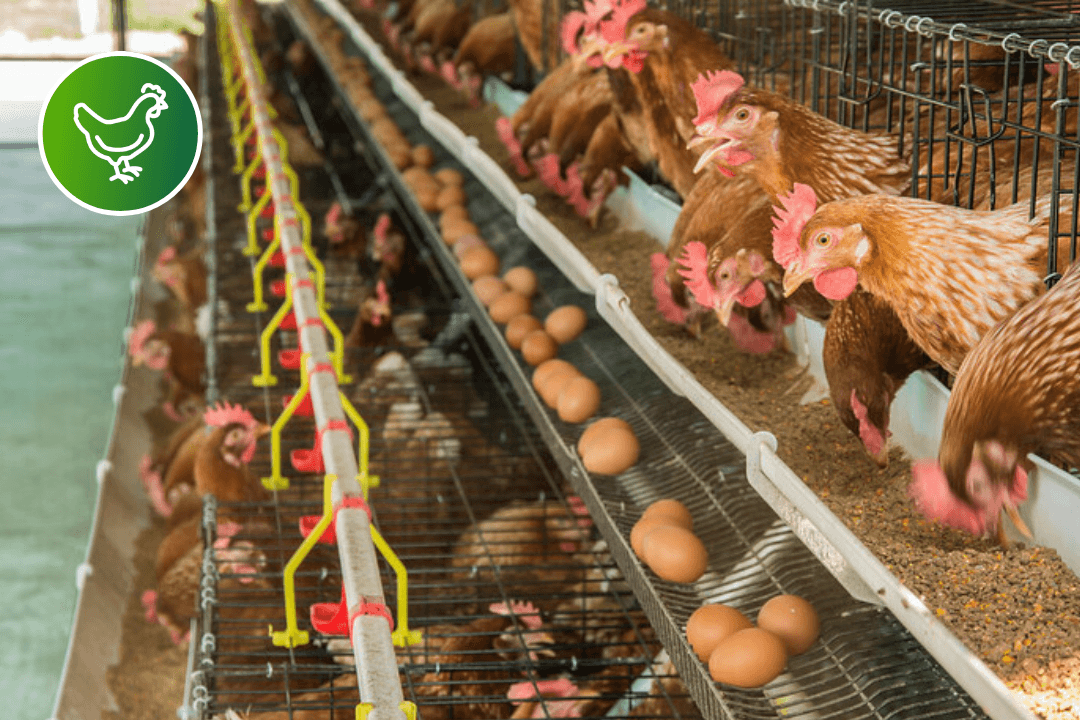
As the U.S. avian influenza outbreak enters its fourth year, large-scale commercial losses continue to mount. Pennsylvania alone lost roughly 2.4 million birds in two weeks, while Colorado culled 1.33 million hens following its first 2026 detection. Additional outbreaks in Georgia, Mississippi, and California reinforced sustained domestic spread. Internationally, Scotland reported nearly one million birds culled since mid-December, with losses concentrated at the nation’s largest egg producer. Meanwhile, new research suggests early U.S. dairy H5N1 spread was significantly undercounted and confirms ongoing viral adaptation in cattle.
Pennsylvania Loses Roughly 2.4 Million Commercial Birds Over Two Week Span
The United States Department of Agriculture (USDA) Animal and Plant Health Inspection Service (APHIS) has confirmed four commercial highly pathogenic avian influenza (HPAI) outbreaks in Lancaster County, Pennsylvania, between January 28 and February 11, affecting roughly 2.4 million birds. An initial outbreak on January 28 involved 1,509,700 commercial laying hens, followed by 722,100 laying hens on February 3 (Graber, 2026a; Graber, 2026d). Subsequent detections included 36,000 commercial meat turkeys confirmed February 10 and 104,800 table egg laying hens confirmed February 11 (Graber, 2026g; Graber, 2026h). Lancaster County is the only Pennsylvania county to report commercial poultry infections in 2026. Prior to these cases, the state’s last commercial detection occurred December 29, 2025, involving 32,800 commercial meat ducks. Pennsylvania lost 10 commercial flocks totaling 2,327,600 birds in 2025, indicating that year-to-date 2026 losses in a single county have already exceeded last year’s statewide total.
Colorado Culls 1.33 Million Hens After First 2026 Commercial HPAI Detection
The United States Department of Agriculture (USDA) Animal and Plant Health Inspection Service (APHIS) confirmed highly pathogenic avian influenza (H5N1) on January 30 in a commercial laying hen flock of 1,332,700 birds in Weld County, Colorado. State officials have issued quarantine orders around the affected premises, and Colorado enacted a disaster declaration for Weld County (Wendland, 2026). All birds in the flock are being euthanized, with the Colorado Department of Agriculture establishing an on-site response center for depopulation and disposal operations. This is Colorado’s first commercial detection since July 2024. Since the virus first emerged in the state in 2022, approximately 10 million chickens have been culled (Graber, 2026b).
Study Published Late January 2026 Finds Early H5N1 Dairy Spread Exceeded Official Counts
A study published in late January 2026 in Emerging Infectious Diseases found influenza A(H5N1) viral RNA in 36% of U.S. retail milk samples collected April 13–May 3, 2024, across 13 states (Tarbuck et al., 2026). Positive samples were identified in Arkansas, Indiana, Minnesota, Missouri, and Oklahoma, despite no reported dairy herd outbreaks in those states at the time. As of April 12, 2024, only 29 infected herds had been officially reported nationwide, indicating that early outbreak spread substantially exceeded confirmed case counts. In follow-up sampling conducted December 27, 2024–January 29, 2025, 6.9% of retail milk samples tested positive, all processed in California. Federal testing mandates issued in April and December 2024 expanded dairy herd surveillance, with reported infections rising to more than 1,000 herds as detection intensified. Researchers concluded that early infections were widespread and underdetected, but expanded federal testing requirements have since improved outbreak visibility and alignment between surveillance data and reported cases (Bergeson, 2026).
Georgia Confirms Third Broiler Breeder Flock Hit by HPAI in 2026
The United States Department of Agriculture (USDA) Animal and Plant Health Inspection Service (APHIS) confirmed highly pathogenic avian influenza (H5N1) on February 2 in a 39,600-bird commercial broiler breeder flock in Hart County, Georgia. The Hart County detection follows two January confirmations in Walker County involving broiler breeder flocks of 71,300 and 16,100 birds. With this latest case, Georgia’s 2026 commercial outbreak total already matches the three flocks affected statewide in all of 2025. Prior to 2025, only one additional commercial operation — a waterfowl facility — had been impacted in the state during the 2022–2026 outbreak period (Graber, 2026c).
Mississippi Loses 95,200 Broilers in Amite County HPAI Outbreak
The United States Department of Agriculture (USDA) Animal and Plant Health Inspection Service (APHIS) confirmed highly pathogenic avian influenza (H5N1) on February 6 in a 95,200-bird commercial broiler flock in Amite County, Mississippi. Flock size details were released in an updated APHIS report after initial confirmation by federal and state animal health officials. This is Mississippi’s first commercial poultry outbreak of 2026. The state’s previous commercial detection occurred March 12, 2025, when 47,700 broiler breeders were lost in Noxubee County — the only commercial case recorded in Mississippi last year. The state reported two commercial outbreaks in 2024 and one each in 2023 and 2022, indicating relatively intermittent exposure (Graber, 2026e).
January Study Finds Dairy H5N1 Strain Adapting to Mammals, Prompts Surveillance Call
A study published January 16, 2026 in Nature Communications found that the B3.13 genotype of highly pathogenic avian influenza (H5N1), circulating in U.S. dairy herds since 2024, has acquired mutations that improve replication in mammals (Simpson, 2026). Researchers identified a key mutation, PB2 M631L, in 100% of cattle virus sequences analyzed and another, PA K497R, in approximately 95%. Additional mutations (PB2 E627K and PB2 D740N) suggest continued viral adaptation. Laboratory testing showed the adapted virus replicated efficiently in bovine tissues and in human airway cell cultures. Since first detection in U.S. dairy cattle in 2024, 1,084 herds across 19 states have been confirmed infected, along with 71 human cases and two deaths. Authors concluded that continued circulation in cattle may increase zoonotic risk and warned the virus could become endemic without effective control measures. A companion study published the same month found newer clade 2.3.4.4b H5N1 strains show elevated ability to infect mammalian cells, reinforcing calls for strong surveillance and biosecurity (Dholakia et al., 2026).
California Confirms 84,000-Bird Broiler Outbreak in Sonoma County
The United States Department of Agriculture (USDA) Animal and Plant Health Inspection Service (APHIS) confirmed highly pathogenic avian influenza (H5N1) on February 9 in an 84,000-bird commercial broiler flock in Sonoma County, California. Earlier this year, APHIS also confirmed HPAI in a 34,600-bird commercial upland gamebird flock in Butte County. In 2025, California lost 10 commercial flocks totaling 1,263,700 birds, including two operations in Sonoma County (Graber, 2026f).
Large-Scale Outbreaks Continue in Scotland: 968,000 Birds Culled
Official figures from the United Kingdom’s Animal and Plant Health Agency (APHA) show 968,000 birds have been culled in Scotland since December 18, following seven HPAI outbreaks. Notably, three outbreaks occurred at farms owned by Glenrath Farms, Scotland’s largest egg producer. At one site in Midlothian, six sheds totaling approximately 420,000 hens were depopulated. A separate outbreak near Penicuik resulted in the culling of approximately 7,000 organic laying hens within 72 hours of detection. Protection and surveillance zones of 3 kilometers and 10 kilometers, respectively, remain in place around affected premises. Since October, 3,461,013 birds have been culled across the entire United Kingdom, according to APHA data (Hay, 2026).
References
Bergeson, L. (2026, February 5). Center for Infectious Disease Research and Policy. Umn.edu. https://www.cidrap.umn.edu/avian-influenza-bird-flu/federal-testing-improves-detection-h5n1-avian-flu-us-dairy-herds
Dholakia, V., Quantrill, J. L., Richardson, S. A. S., Pankaew, N., Brown, M. D., Yang, J., Capelastegui, F., Masonou, T., Case, K.-M., Ajeian, J., Woodall, M. N. J., Magill, C., Freimanis, G., McCarron, A., Staller, E., Sheppard, C. M., Brown, I. H., Murcia, P. R., Smith, C. M., & Iqbal, M. (2026). Polymerase mutations underlie early adaptation of H5N1 influenza virus to dairy cattle and other mammals. Nature Communications. https://doi.org/10.1038/s41467-026-68306-6
Graber, R. (2026a, January 30). 1.5 million Pennsylvania hens hit by avian influenza. WATTPoultry.com. https://www.wattagnet.com/poultry-meat/diseases-health/avian-influenza/news/15816003/15-million-pennsylvania-hens-hit-by-avian-influenza
Graber, R. (2026b, February 2). Avian flu hits Colorado laying hens, Maryland broilers. WATTPoultry.com. https://www.wattagnet.com/poultry-meat/diseases-health/avian-influenza/news/15816090/avian-flu-hits-colorado-laying-hens-maryland-broilers
Graber, R. (2026c, February 3). Avian influenza strikes again in Georgia. WATTPoultry.com. https://www.wattagnet.com/poultry-meat/diseases-health/avian-influenza/news/15816206/avian-influenza-strikes-again-in-georgia
Graber, R. (2026d, February 4). Avian flu hits 722,100 laying hens in Pennsylvania. WATTPoultry.com. https://www.wattagnet.com/poultry-meat/diseases-health/avian-influenza/news/15816382/avian-flu-hits-722100-laying-hens-in-pennsylvania
Graber, R. (2026e, February 9). 95,200 broilers lost to avian flu in Mississippi. WATTPoultry.com. https://www.wattagnet.com/poultry-meat/diseases-health/avian-influenza/news/15816654/95200-broilers-lost-to-avian-flu-in-mississippi
Graber, R. (2026f, February 10). Avian influenza found in California broiler farm. WATTPoultry.com. https://www.wattagnet.com/poultry-meat/diseases-health/avian-influenza/news/15816751/avian-influenza-found-in-california-broiler-farm
Graber, R. (2026g, February 11). Avian flu continues to strike in Pennsylvania. WATTPoultry.com. https://www.wattagnet.com/poultry-meat/diseases-health/avian-influenza/news/15816923/avian-flu-continues-to-strike-in-pennsylvania
Graber, R. (2026h, February 12). Avian flu confirmed in another Pennsylvania layer flock. WATTPoultry.com. https://www.wattagnet.com/poultry-meat/diseases-health/avian-influenza/news/15817080/avian-flu-confirmed-in-another-pennsylvania-layer-flock
Hay, K. (2026, February). The Scotsman. The Scotsman. https://www.scotsman.com/hays-way/almost-one-million-hens-culled-as-bird-flu-sweeps-south-of-scotland-5497122
Simpson, C. (2026). “Concerning” bird flu study findings prompt “essential” surveillance call. Vettimes.com. https://www.vettimes.com/news/vets/livestock/concerning-bird-flu-study-findings-prompt-essential-surveillance-call
Tarbuck, N. N., Franks, J., Jones, J. C., Kandeil, A., DeBeauchamp, J., Miller, L., Fabrizio, T., Woodard, K., Cochran, H. J., Owsiany, M. C., Foreman, B. M., Lowe, J. F., Webby, R. J., & Bowman, A. S. (2026). Retail Milk Monitoring of Influenza A(H5N1) in Dairy Cattle, United States, 2024–2025. Emerging Infectious Diseases, 32(2). https://doi.org/10.3201/eid3202.251332
Wendland, T. (2026, February 3). State responds to major avian flu outbreak in Weld County. Colorado Public Radio. https://www.cpr.org/2026/02/03/weld-county-avian-flu-outbreak/